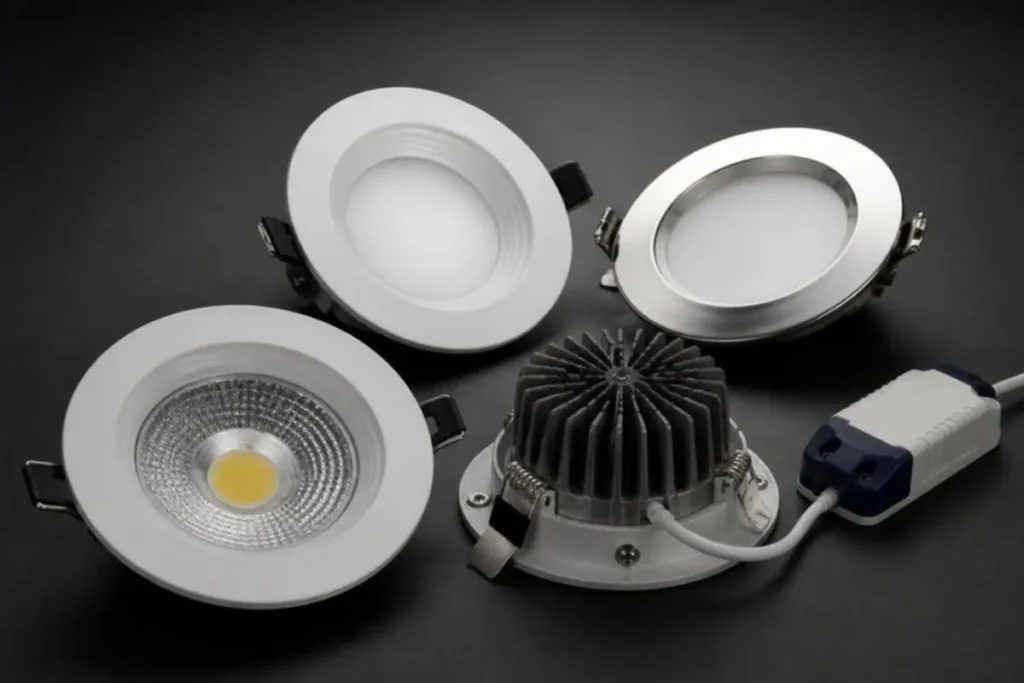
Quick answer: For most rooms with a standard ceiling height, a 7W to 10W LED downlight in warm or neutral white with a wide beam angle is the right starting point. Check the lumens, the cut-out size and the ceiling depth before you buy, and choose a fitting with a good driver and warranty.
Recessed downlights are the workhorse of modern interiors. They are discreet, efficient and suit almost every room. But the choice on the market is wide, and two fittings that look identical can perform very differently once installed. These are the four things worth checking before you order.
1. Brightness: look at lumens, not just watts
Wattage tells you how much power a light uses. Lumens tell you how much light it gives. For general lighting in a living room or bedroom, a 7W to 10W LED downlight is a common choice. Kitchens, offices and retail areas usually need more light and closer spacing.
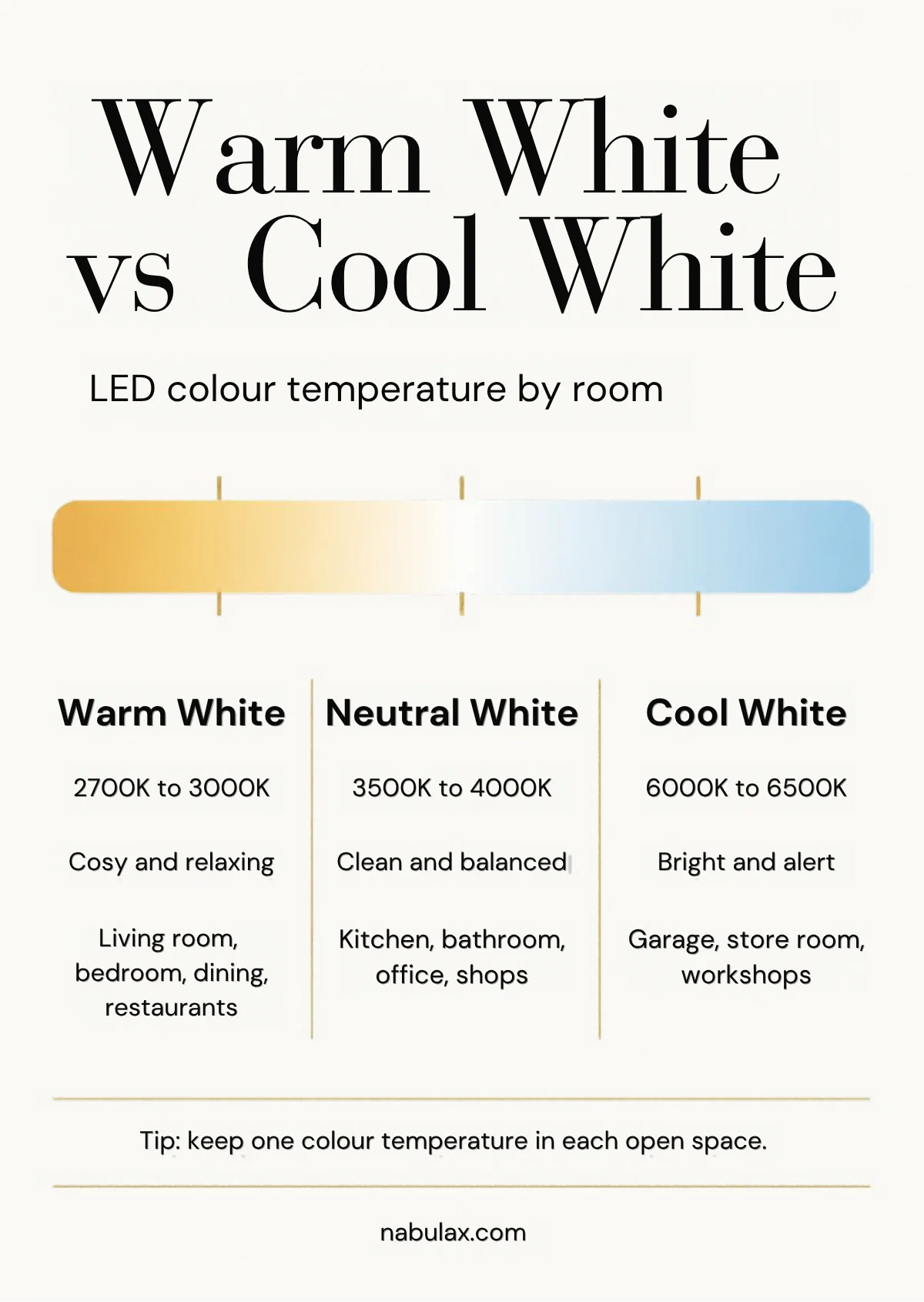
2. Colour temperature
Warm white (around 2700K to 3000K) feels relaxed and suits living rooms, bedrooms and restaurants. Neutral white (around 4000K) is crisp without being cold and works well in kitchens, bathrooms and offices. Cool white (6000K and above) is best kept for utility and task areas.
3. Beam angle
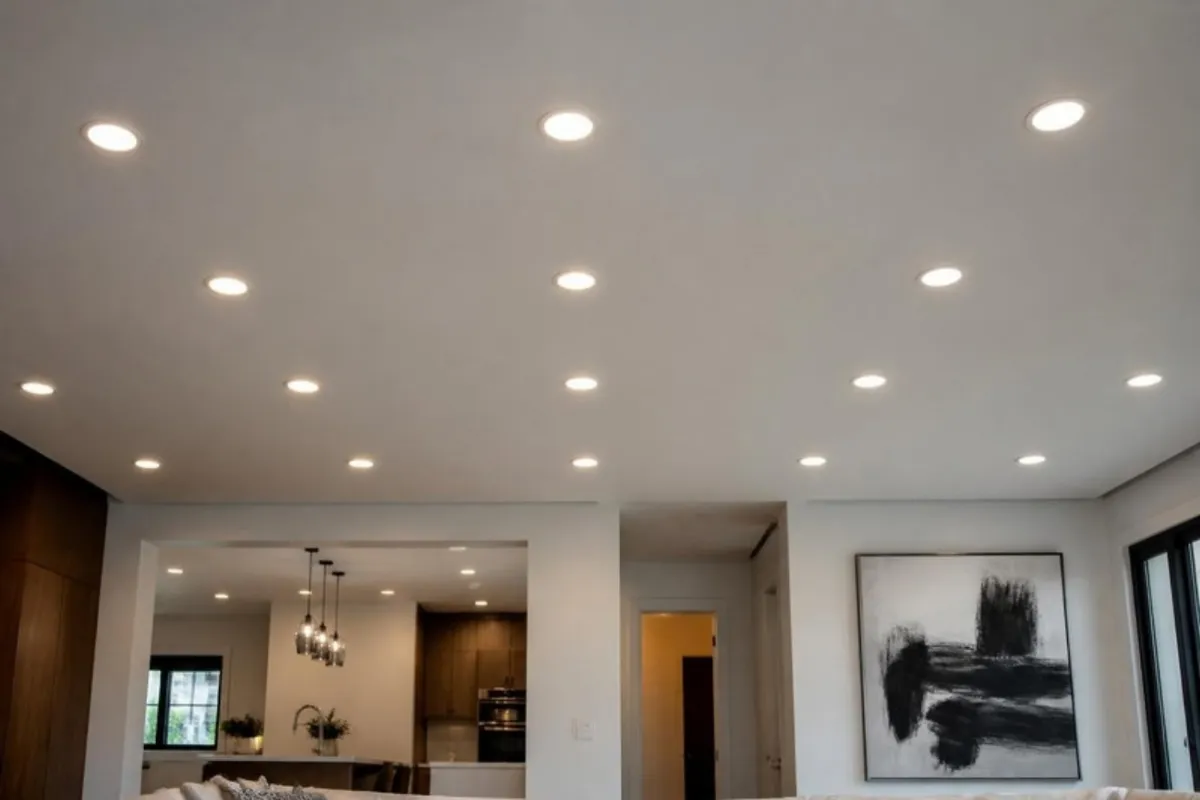
A wide beam spreads light evenly for general illumination. A narrow beam creates pools of light and is better for highlighting artwork, shelves or a dining table. Many projects mix the two.
4. Cut-out size and ceiling depth
Check the cut-out diameter and the depth the fitting needs above the ceiling before you finalise your ceiling plan. Changing it afterwards is expensive.
5. Colour rendering (CRI)
CRI measures how accurately a light shows colours. A CRI of 80 is acceptable for general use. For living rooms, kitchens, retail and anywhere colour matters, look for CRI 90 or above.
6. Anti-glare design
In a deep or “anti-glare” downlight the LED sits back inside the fitting, so you see the light on the floor but not a bright dot on the ceiling. They cost a little more and need more ceiling depth, but the room feels noticeably more comfortable.
7. Fixed, adjustable or surface mounted?
- Fixed recessed: the standard choice for general lighting.
- Adjustable (tilt): lets you aim light at a wall, artwork or shelf.
- Surface mounted: for concrete ceilings with no false ceiling.
8. Bathrooms and outdoor areas
Use a downlight with a suitable IP rating in bathrooms, balconies and covered outdoor areas. Our guide to IP ratings explains which rating you need.
Quick reference by room
| Room | Typical choice |
|---|---|
| Living room | 7W to 10W, warm white, wide beam, dimmable |
| Bedroom | 7W, warm white, placed away from the bed |
| Kitchen | 10W to 12W, neutral white, closer spacing over worktops |
| Bathroom | IP-rated, neutral white |
| Office or shop | 12W and above, neutral white, high CRI |
Browse genuine LED spot and downlights with warranty, delivered across Bangladesh.
Frequently asked questions
How many watts should an LED downlight be?
For homes with a normal ceiling height, 7W to 10W suits most rooms. Kitchens, offices and shops usually need 10W to 15W or closer spacing.
What size downlight is most common?
Cut-outs of around 3 to 4 inches are the most common in homes. Always confirm the exact cut-out of the fitting before the ceiling is cut.
Are Philips LED downlights available in Bangladesh?
Yes. We supply genuine Philips downlights with warranty and deliver across the country.
Related guides
- How Many Downlights Do I Need? A Simple Spacing Guide
- False Ceiling Lighting Ideas: Cove, Downlights and More
- LED Light Price in Bangladesh: What Affects the Cost
Need help choosing?
If you already have a lighting layout or a BOQ, send it to us and we will match suitable downlights to your specification and budget.
