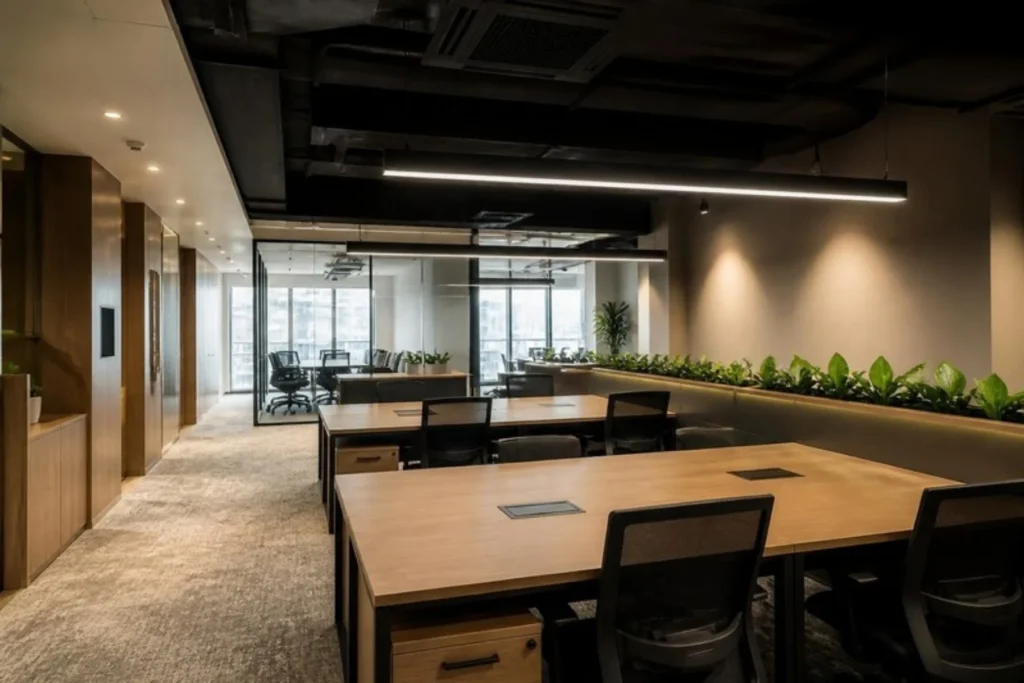
Quick answer: Good office lighting is even, glare-free and neutral white. Aim for around 300 to 500 lux on desks, use linear or panel fittings with good diffusers, keep one colour temperature across open areas, and add warmer feature lighting in reception and breakout spaces.
Lighting has a direct effect on how comfortable people feel at work. Too dim and the space feels tiring. Too bright or badly positioned and screens become hard to read. A few principles make a big difference.
Aim for even light across work areas
Desks need consistent light without dark patches. Linear fittings and panels arranged in a regular grid usually achieve this better than a small number of very bright fittings.
Control glare
Glare is the most common complaint in offices. Choose fittings with good diffusers or low-glare optics, and avoid placing bright sources directly in the line of sight of people looking at screens.
Keep colour consistent
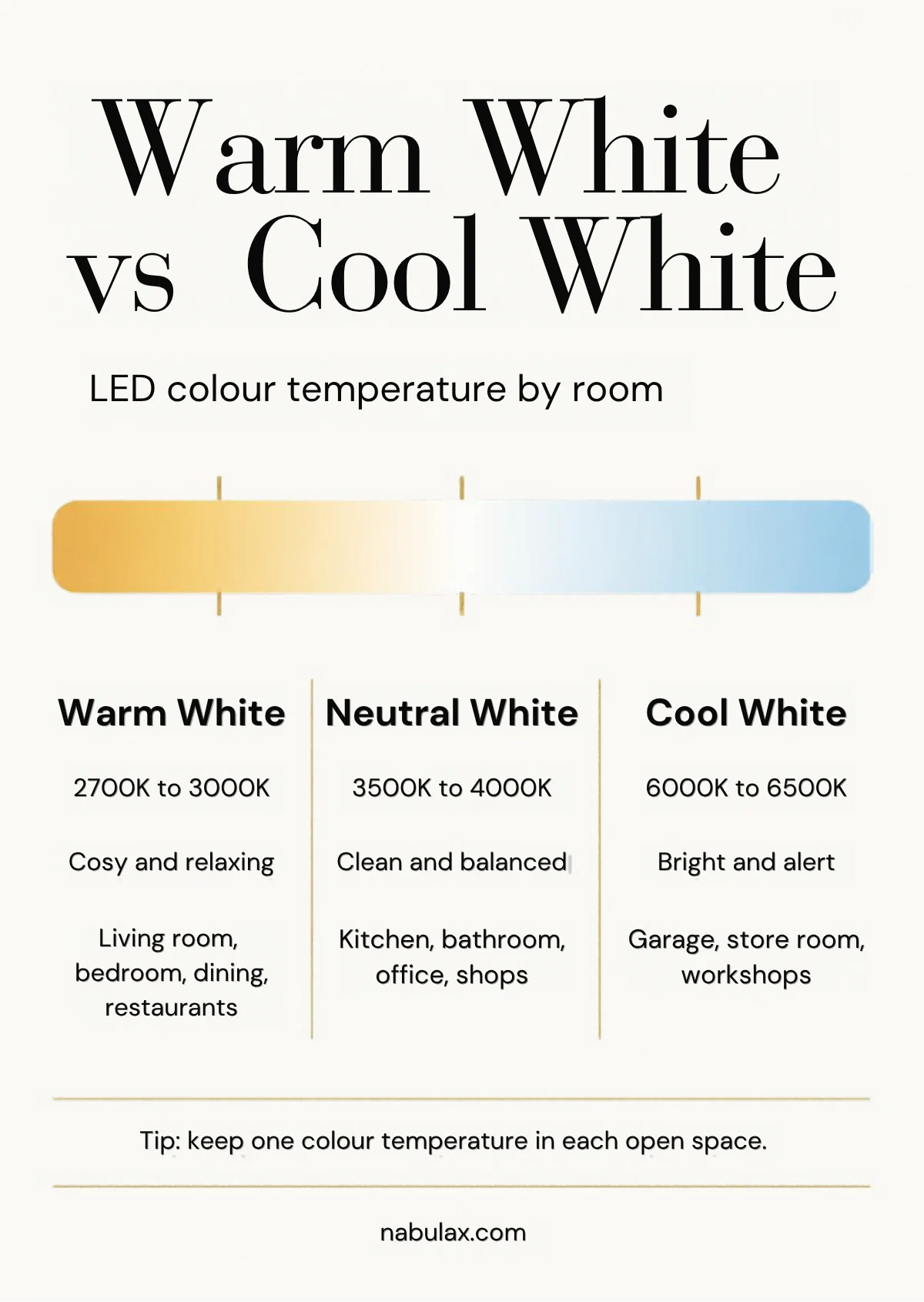
Mixing colour temperatures in one open space looks untidy. Neutral white is a safe choice for work areas, with warmer light in breakout spaces and reception to create contrast.
Make reception and meeting rooms feel different
Feature pendants in reception or over a meeting table add character and help visitors read the space. They do not need to carry the general lighting on their own.
Plan quantities early
For a fit-out, share your drawings or BOQ at the start. Confirming products and lead times early avoids delays at the end of the project.
How bright should an office be?
As a general guide, desk work needs about 300 to 500 lux on the work surface. Corridors and storage areas need less, and detailed tasks such as drawing or inspection need more. Your lighting supplier or designer can calculate fitting quantities from your floor plan.
Which fittings suit which area?
| Area | Typical fittings |
|---|---|
| Open workstations | Linear pendants or LED panels in a regular layout |
| Meeting rooms | Dimmable downlights, with a linear pendant over the table |
| Reception | Feature pendants and accent spotlights |
| Corridors and lobbies | Recessed downlights |
| Breakout and pantry | Warmer decorative lighting |
| Exterior and parking | IP-rated outdoor fittings |
Save energy without making the office dull
- Use efficient LED fittings with a high lumen output per watt.
- Zone the lighting so empty areas can be switched off.
- Make use of daylight near windows and switch those rows separately.
- Consider occupancy sensors in meeting rooms, stores and washrooms.
Do not overlook wiring devices
Desks need enough sockets and data points. Specify quality switches and sockets from a recognised brand, since they will be used hundreds of times a day.
See our office and commercial lighting solutions, or send your drawings for a quotation.
Frequently asked questions
What colour temperature is best for an office?
Neutral white, around 4000K, is comfortable for concentration. Use warmer light in reception and breakout areas.
How do I reduce glare on computer screens?
Choose fittings with diffusers or low-glare optics, avoid placing bright lights directly in front of or behind screens, and use blinds to control daylight.
Can you supply lighting for a full office fit-out?
Yes. Send your drawings or BOQ and we will price the complete package and plan delivery around your programme.
