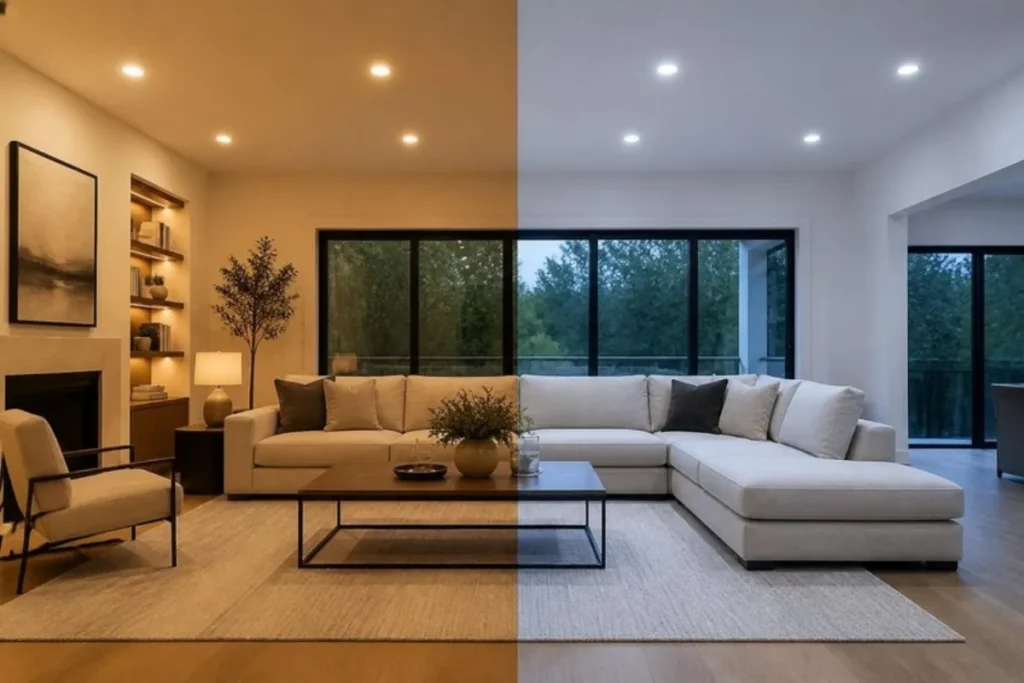
Quick answer: Use warm white (2700K to 3000K) in living rooms, bedrooms and dining areas, neutral white (around 4000K) in kitchens, bathrooms, offices and shops, and cool white (6000K and above) only in utility and task areas. Keep one colour within each open space.
Two LED lights with the same wattage can make a room feel completely different. The reason is colour temperature, measured in Kelvin (K). Choosing the right one for each room is one of the cheapest ways to improve how a space feels.
What the numbers mean
- Warm white, about 2700K to 3000K: a soft, yellowish light similar to a traditional bulb. Relaxing and flattering.
- Neutral white, about 4000K: clean and balanced, without looking yellow or blue.
- Cool white or daylight, about 6000K to 6500K: a bright, bluish white that feels alert and clinical.
Room-by-room recommendations
- Living room and bedroom: warm white. It helps the room feel calm in the evening.
- Dining room and restaurants: warm white, ideally dimmable.
- Kitchen: neutral white for worktops, with warm white for dining or decorative lights.
- Bathroom: neutral white around the mirror for accurate colour.
- Office and study: neutral white for comfortable concentration.
- Shops and showrooms: neutral white with good colour rendering so products look true to life.
- Garage, store room and utility areas: cool white is fine where visibility matters more than atmosphere.
Do not mix colours in one space
The most common mistake is mixing warm and cool fittings in the same room. It makes the ceiling look patchy. Pick one colour temperature for each open area and keep it consistent across downlights, strips and decorative lights.
Colour rendering matters too
Colour temperature is not the same as quality of light. Look at the colour rendering index (CRI) as well. A higher CRI shows furniture, food, fabric and skin tones more accurately, which is especially important in retail and hospitality.
What about switchable lights?
Some LED fittings let you switch between warm, neutral and cool white. They are a practical choice if you are unsure, or if one room is used for both work and relaxation.
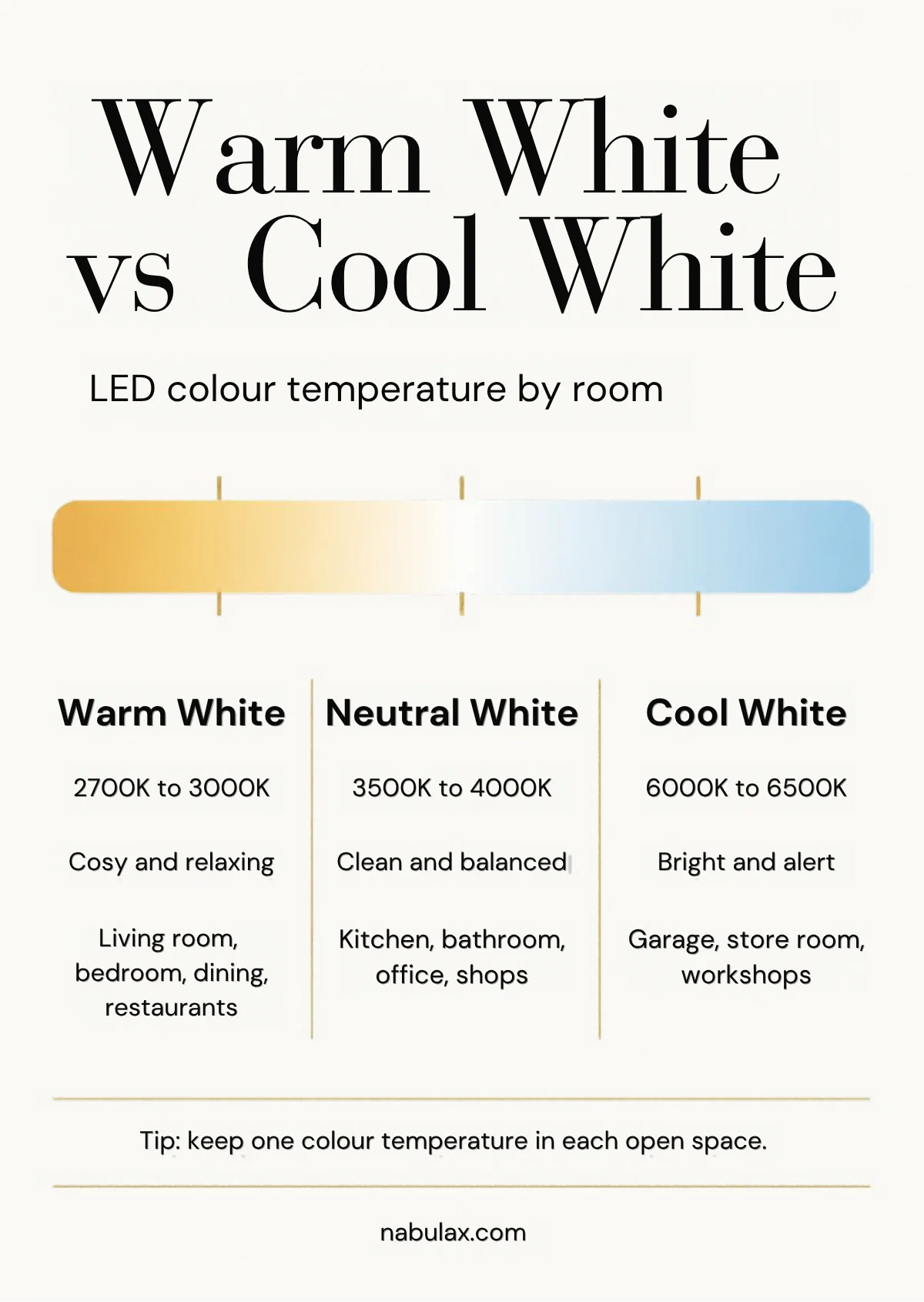
Colour temperature chart
| Colour | Kelvin | Feels | Best for |
|---|---|---|---|
| Warm white | 2700K to 3000K | Cosy, relaxing | Living, bedroom, dining, restaurants |
| Neutral white | 3500K to 4000K | Clean, balanced | Kitchen, bathroom, office, retail |
| Cool white / daylight | 6000K to 6500K | Bright, alert | Garage, store, workshops |
Why so many homes in Bangladesh use cool white
Cool white tube lights were the standard for decades, and many people still associate a bluish light with “brighter”. In fact a warm white LED with the same lumens gives the same amount of light. It simply feels calmer. If you are moving from cool white, try neutral white first, as it is an easy middle step.
Does light colour affect sleep?
Cooler, bluer light in the evening tends to make people feel more alert, which is why warm light is generally recommended for bedrooms and for the hours before sleep. See our bedroom lighting ideas.
Buying tips
- Check the Kelvin figure on the box, not just the words “warm” or “cool”.
- Buy all the fittings for one room from the same brand and batch, so the colour matches.
- Order a few spares for future replacements.
Frequently asked questions
Is warm white or cool white better for eyes?
Neither is harmful in normal use. Comfort depends more on brightness, glare and flicker. Many people find warm or neutral white more comfortable at home.
Which is brighter, warm white or cool white?
Brightness is measured in lumens, not colour. Two lights with the same lumens are equally bright, although cool white can appear brighter to the eye.
What is 4000K light called?
Neutral white, sometimes called natural white. It sits between warm white and cool white.
Related guides
- How to Choose the Right LED Downlight
- Bedroom Lighting Ideas for a Calm, Comfortable Room
- Restaurant and Cafe Lighting Ideas That Bring Guests Back
Need help choosing?
Browse the Nabulax shop for genuine products with warranty and delivery across Bangladesh, or request a quote and send us a photo, design or BOQ. If the product is not available locally, we can import it for you.
